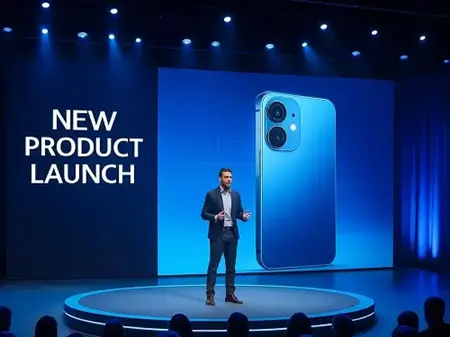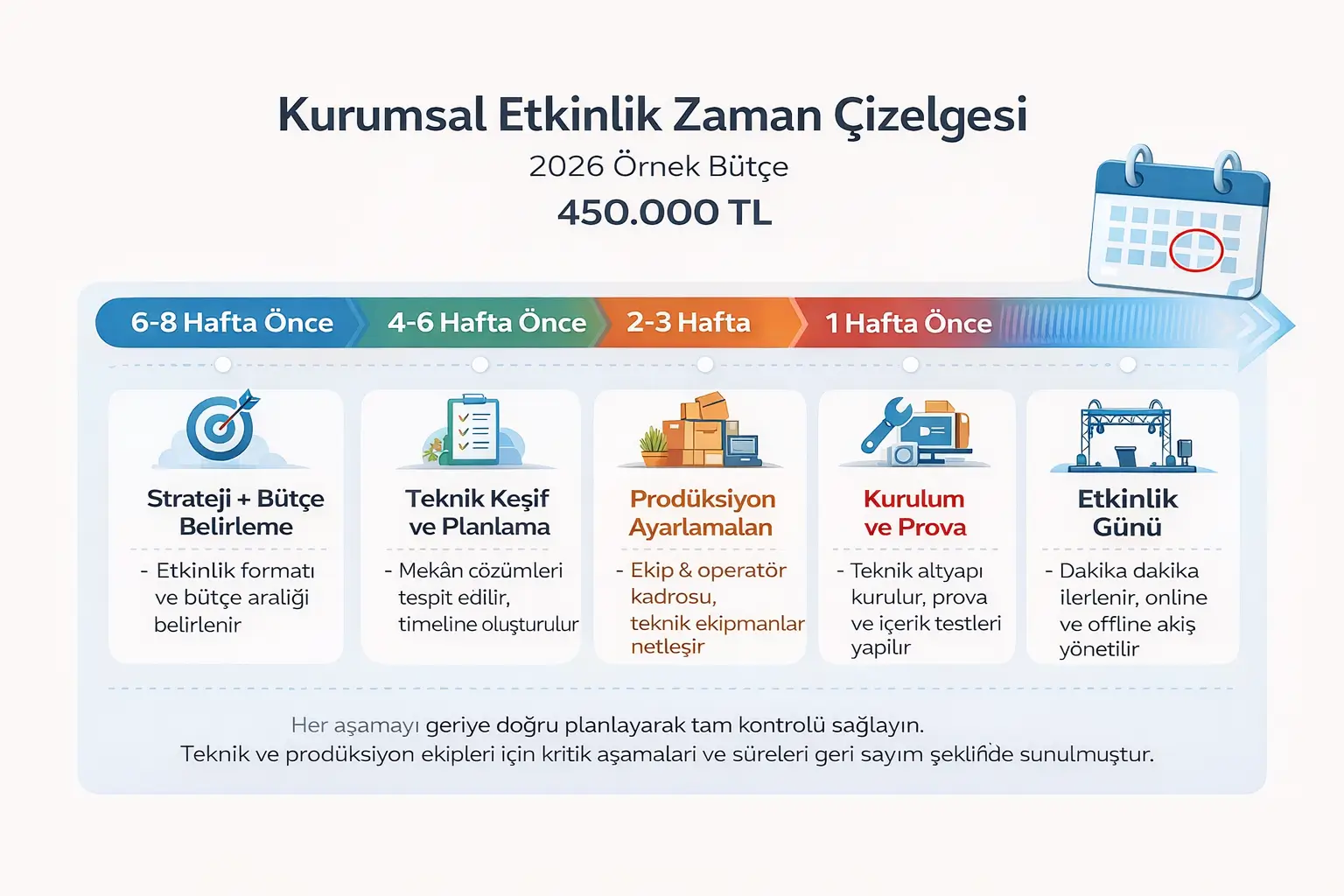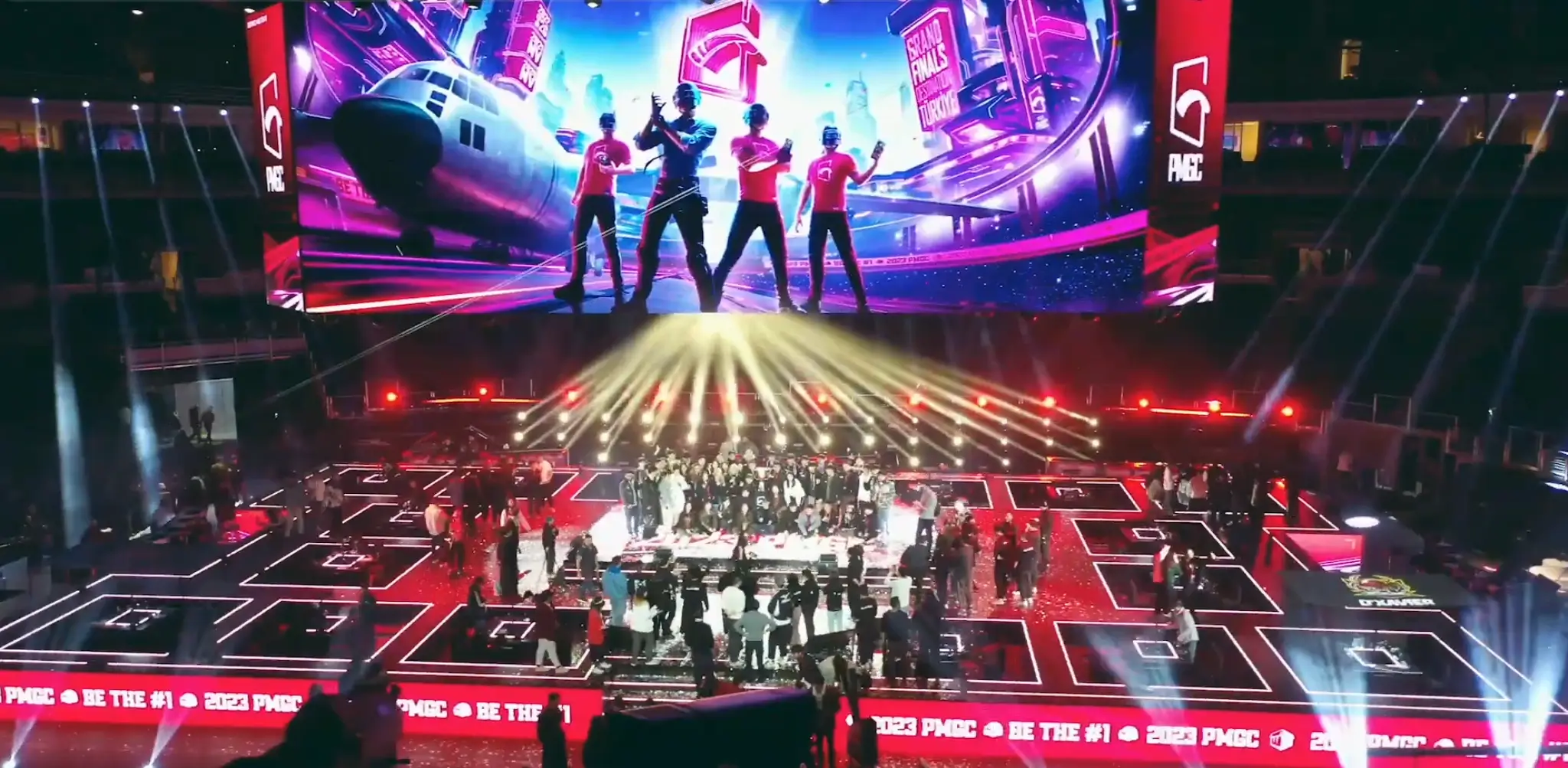
For event agencies and corporate organisers delivering corporate events in Türkiye, the technical plan turns an approved programme into a safe, buildable show. Stage, LED screen, sound, lighting, rigging and power must work as one production system.
This guide focuses on the decisions a production buyer should close with the technical partner before equipment is reserved. The aim is not to select isolated products, but to design an event production workflow that can be installed, tested, operated and dismantled within the venue schedule.
1. Define the Event Brief
Technical production starts with one clear brief shared by the organiser, venue and production team. It should define the following points before detailed drawings and equipment lists are prepared:
- Event type: conference, launch, awards, gala or dealer meeting.
- Audience size: seated, standing, VIP and press numbers.
- Programme: speakers, panels, performances, presentations and video.
- Venue: confirmed location, room or outdoor event area.
- Schedule: load-in, rehearsal, guest access, show and dismantling.
- Technical expectations: stage, screens, audio, lighting, recording or streaming.
2. Check the Venue Before Designing the Production
A site survey should come before the final stage, LED, sound and lighting design. Photographs and floor plans are useful, but the technical team still needs verified dimensions, access information and venue restrictions.
- Structure: ceiling height, rigging point positions, allowable loads and any suspension restrictions.
- Access: vehicle route, loading doors, lifts, steps, load-in distance and technical access during the event.
- Power: available supply, distribution locations and a suitable generator position if additional or contingency power is required.
- Operation: FOH position, installation time, dismantling window and audience sightlines from the front, sides and rear.
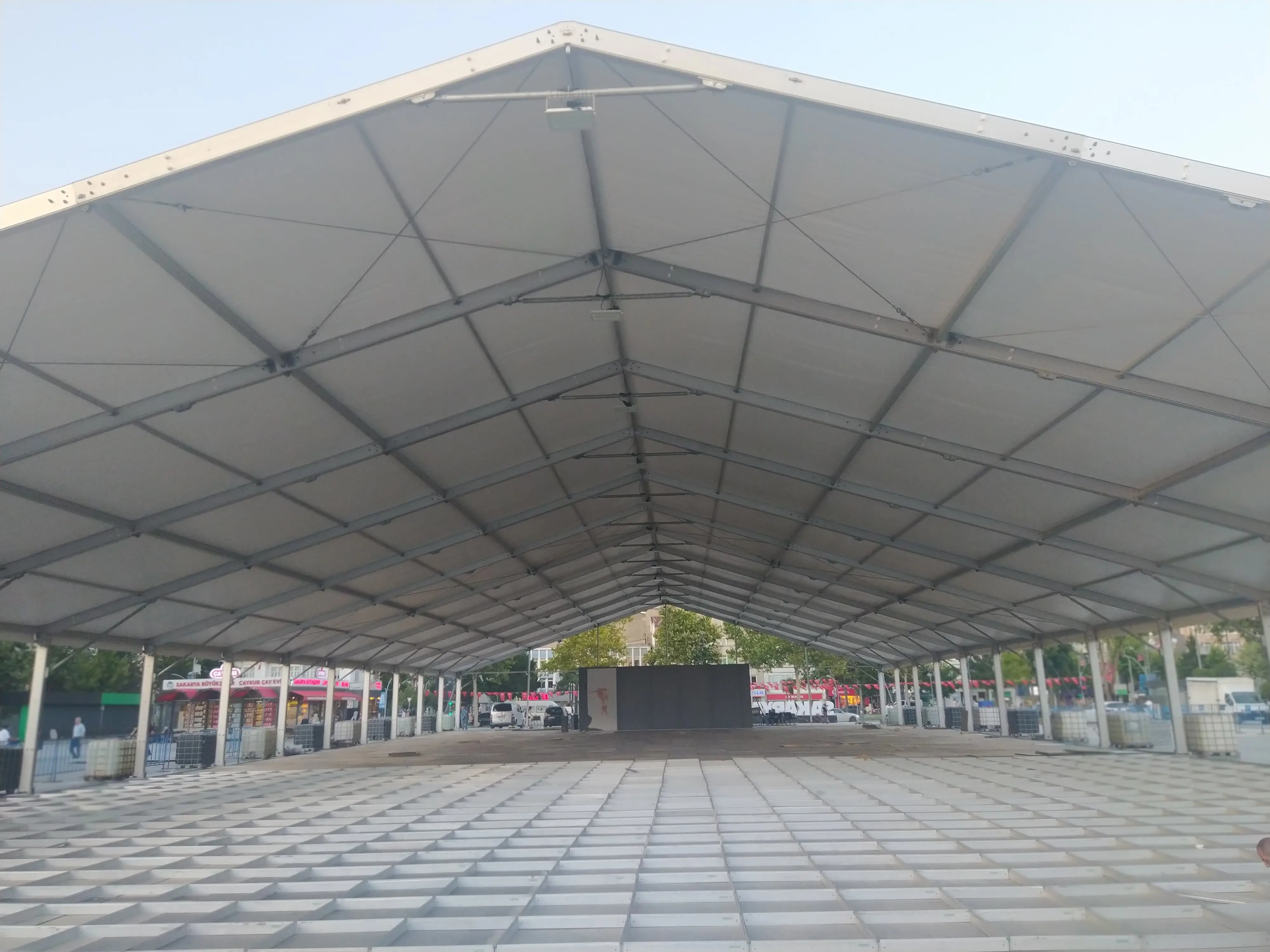
For outdoor or temporary venues, the survey should also cover ground conditions, weather protection and how the tent structure interacts with rigging, power and cable routes.
3. Plan the Stage and Audience Layout
Stage dimensions should follow the programme, scenic elements, LED footprint, speaker movement and room geometry. A professional stage rental plan also checks platform height, stairs or ramps, edge protection, backstage access and the viewing angle from every audience zone.
Speech-led events may need a branded podium, confidence monitors and clear routes between seating, backstage and the speaking position. VIP and protocol requirements should be reflected in entrances, reserved sightlines, stage furniture and safe circulation rather than added after installation.
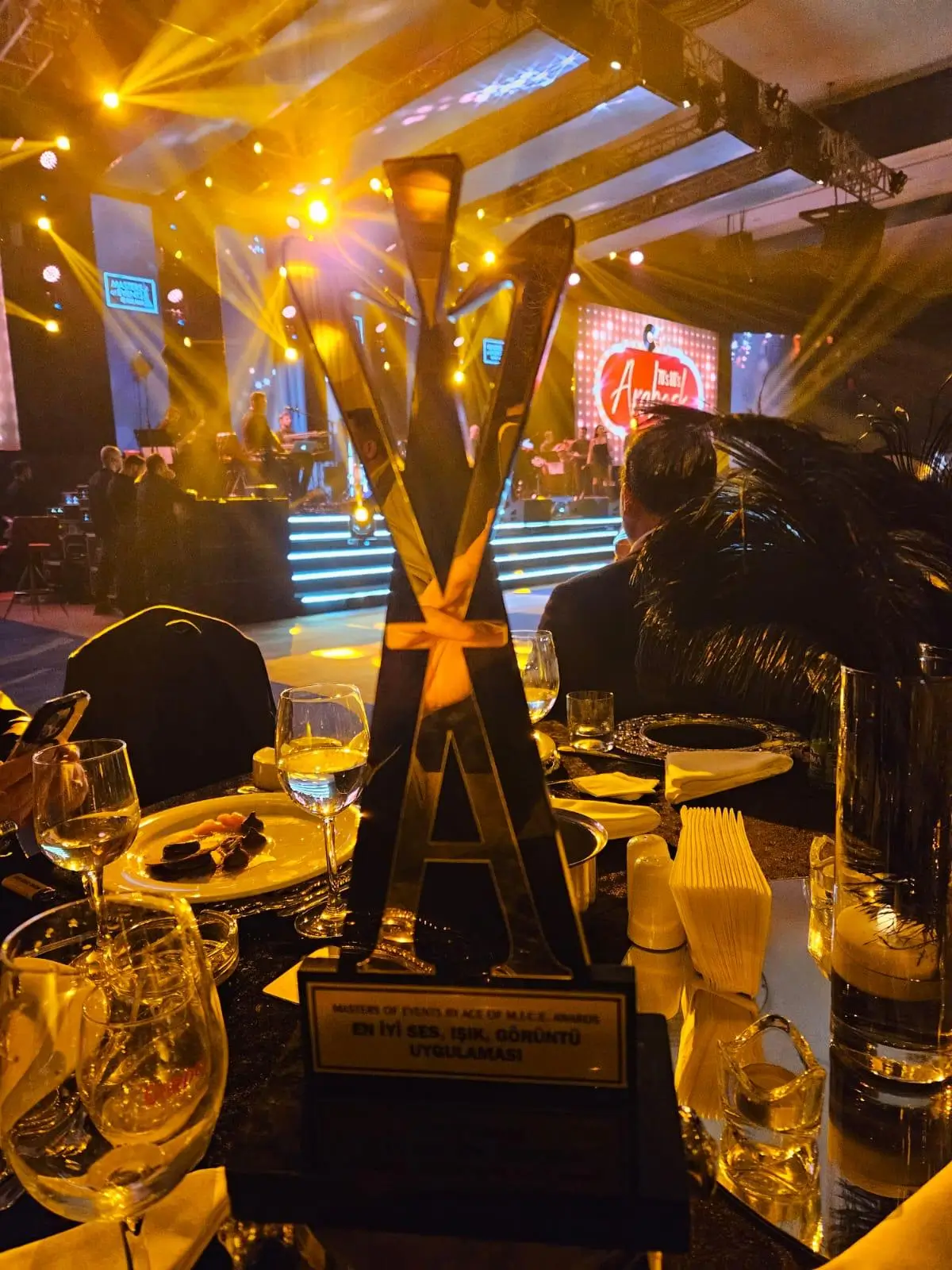
4. Choose LED, Sound and Lighting as One System
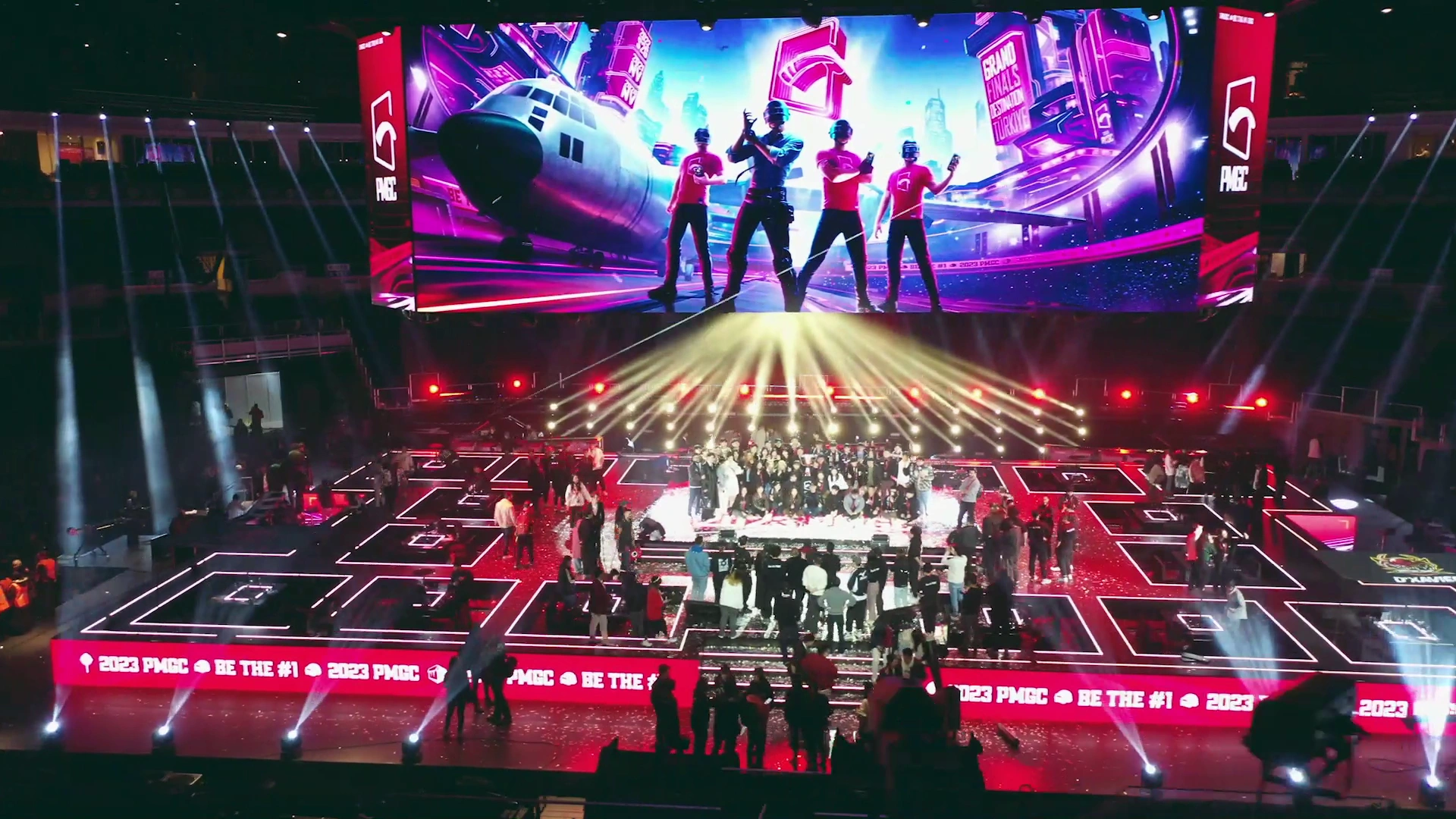
The correct LED screen size depends on the content format, stage width, closest and farthest viewing positions, side angles and ambient light. Pixel pitch should be selected for the viewing distance and required image detail; screen weight, processing, signal distribution and power then feed back into the rigging and electrical plan.
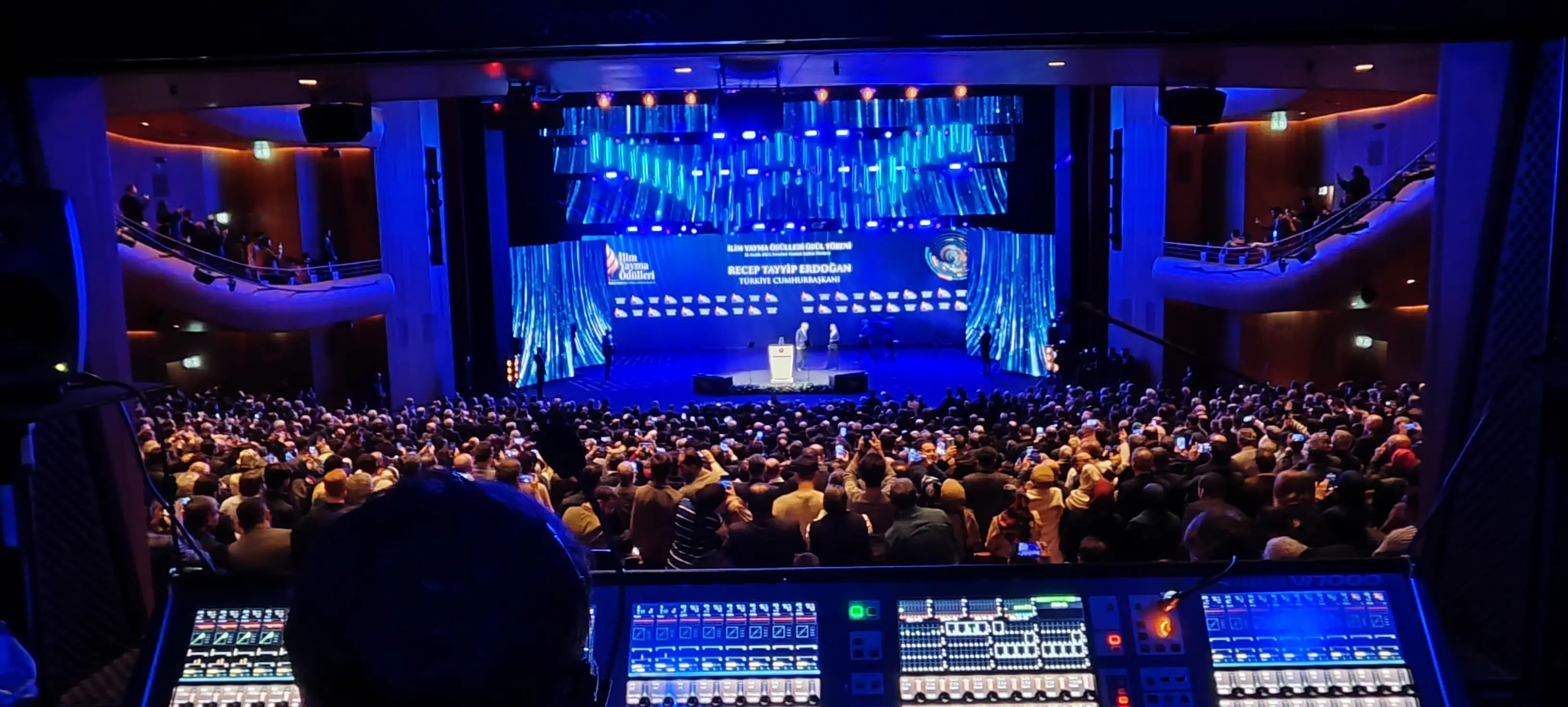
Sound coverage should be designed for the room, audience layout and acoustic conditions. Microphone requirements follow the programme: lectern, handheld, headset, panel and audience Q&A all need different workflows. The sound and lighting system should combine clear speech, even audience coverage, speaker and camera lighting, safe audience illumination and atmospheric cues under one FOH plan.
5. Plan Rigging, Power and Safety
Truss and suspended equipment should be designed only after rigging points, point capacities, ceiling limits and venue procedures are confirmed. The plan must account for LED screens, lighting fixtures, loudspeakers, motors, cabling and any scenic loads without blocking technical or emergency access.
Electrical distribution should be calculated from the complete system rather than individual equipment lists. Supply capacity, phase distribution, cable lengths and protected cable routing need to be agreed before load-in. A generator may be required where venue power is insufficient or where the risk plan calls for a separate contingency supply.
6. Load-In, Testing, Rehearsal and Show Day
A realistic schedule reserves separate time for installation, testing and rehearsal. Compressing all three into the final hours before doors open leaves little room to diagnose a signal, power, content or microphone issue.
- Load-in and installation: coordinate vehicles, crews, stage, rigging, LED, sound, lighting, power and safe cable routes.
- System testing: check presentation files, video formats, media playback, signal paths, microphones, loudspeaker coverage, lighting cues and communications.
- Technical rehearsal: run speaker entrances, podium positions, panel changes, videos and show cues with the approved programme.
- Show and dismantling: operate from clear cue sheets and responsibilities, then dismantle within the venue window and agreed access rules.
7. Backup and Redundancy
Backup planning should be proportional to the consequence of failure and the time available to recover. Priorities normally include backup microphones, secondary media playback with the final presentation files, spare signal paths, essential cables and adapters, a power contingency for show-critical equipment, and critical spares that the onsite team can replace quickly.
Budget note: Technical production budgets depend on the venue, audience size, event duration, installation schedule, equipment specification and production complexity. A useful quotation separates the production scope, crew, logistics and operating period instead of forcing every event into fixed percentages.
Frequently Asked Questions
Frequently Asked Questions
How early should technical planning start for a corporate event?▼
What should be checked before confirming a venue?▼
How is the correct LED screen size determined?▼
Is a technical rehearsal necessary?▼
What backup equipment should be prepared?▼
Planning Technical Production in Türkiye?
Share the venue, audience size, programme and schedule. Sahneva can review the production scope and coordinate stage, LED screen, sound, lighting, rigging, installation and dismantling.
Related Services
Regional Rental
For fast planning and regional crew coordination based on your event location:
Go to the Regional Rental page →