A search for flexible LED screen rental in Turkey can describe two very different technical requests. One buyer may need soft LED modules that follow a custom-built surface. Another may simply want a clean curve, a circular band or a cylindrical display for an exhibition stand or event stage. Those results do not always require the same product.
This guide explains the difference without treating one construction method as universally superior. It also shows a real Sahneva Absen P1.9 installation in which eight rental panels were joined at 45 degrees to form a complete 360-degree circle. For equipment, installation and on-site operation, see LED screen rental in Turkey.
Quick answer: start with the shape, not the word “flexible”
Planning a curved exhibition stand?
If “flexible LED” in your brief means a smooth curved display rather than a bendable soft module, an angle-set P1.9 rental-cabinet system may be the better fit. It combines fine pixel pitch, repeatable cabinet geometry and serviceable rental hardware. The final radius, content map, viewing distance and camera plan still need project-specific confirmation.
Fine pitch does not automatically make every P1.9 system higher resolution than every flexible product. Resolution depends on the pitch, active surface and exact product being compared. In the same way, “seamless” should not be read as a promise that cabinet joins disappear under every camera and lighting condition. A better target is a carefully aligned, visually continuous canvas at the intended audience and camera positions.
What does “flexible LED screen” usually mean?
In product terminology, flexible or soft LED commonly refers to bendable modules that are fixed to a shaped support or cabinet. The module can follow a tighter or less regular curve than a standard rectangular rental cabinet. That makes the method useful for columns, sculptural forms and permanent or semi-permanent structures whose radius cannot be created with a conventional cabinet angle.
The freedom of the module is only one part of the system. A supplier still has to explain the support surface, module access, power and data routing, replacement method, heat management, processor map and transport protection. “Flexible” is therefore not a complete technical specification by itself.
Questions to ask when a quotation says flexible LED
- Is the proposed product a bendable soft module or a cabinet-based curved rental system?
- What pixel pitch, brightness and refresh configuration is being quoted?
- What radius can the complete system achieve—not only the loose module?
- How are failed modules, power units and data components accessed during an event?
- Is the shaped support included, and who is responsible for its structural design?
How curved rental LED cabinets create a shaped screen
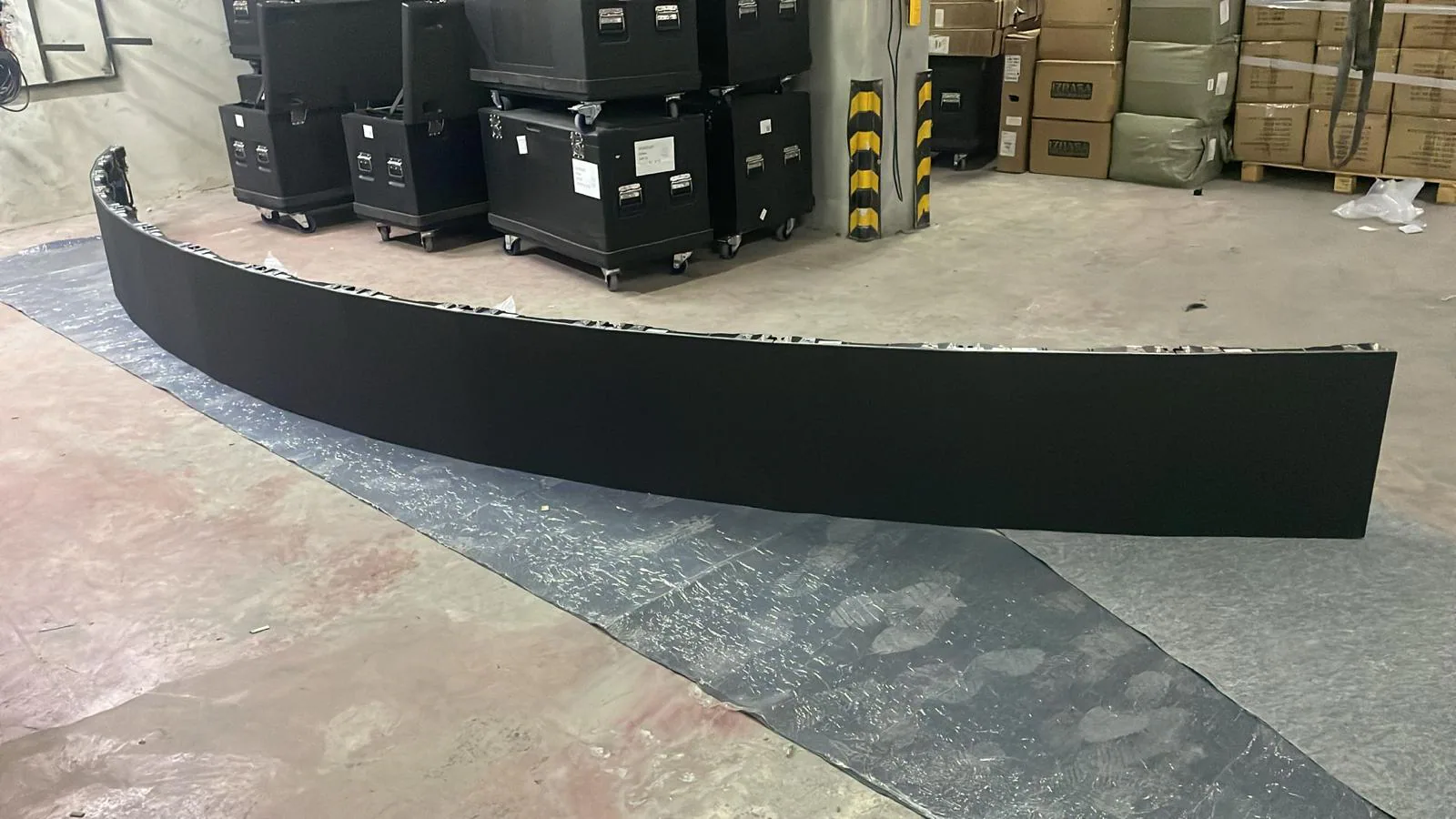
A cabinet-based curved rental wall uses repeatable panel units joined at a planned angle. The curve is created by the geometry of those joins rather than by bending the LED face freely. The approach is well suited to event production because panels remain transportable, replaceable and reusable across different projects.
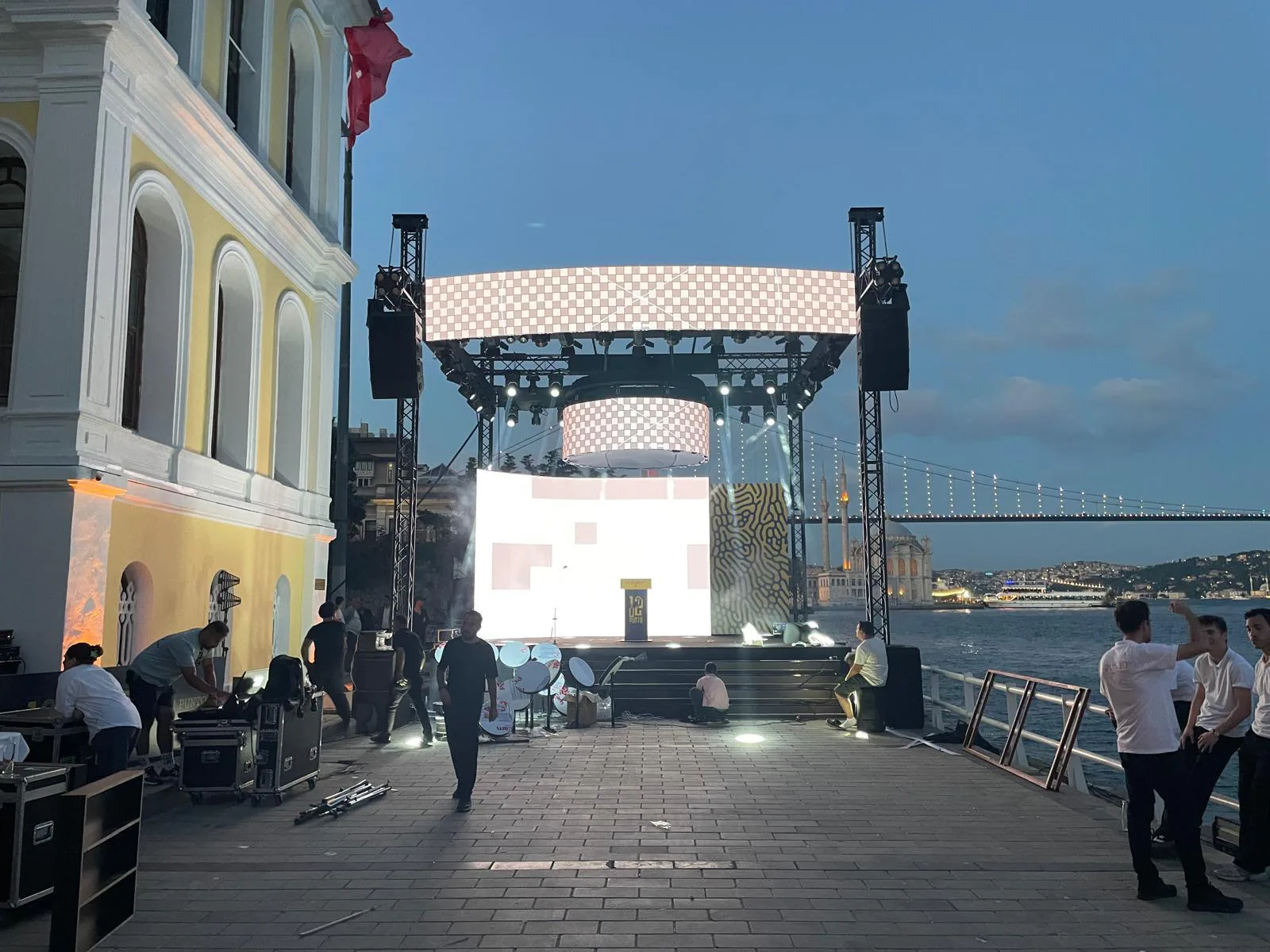
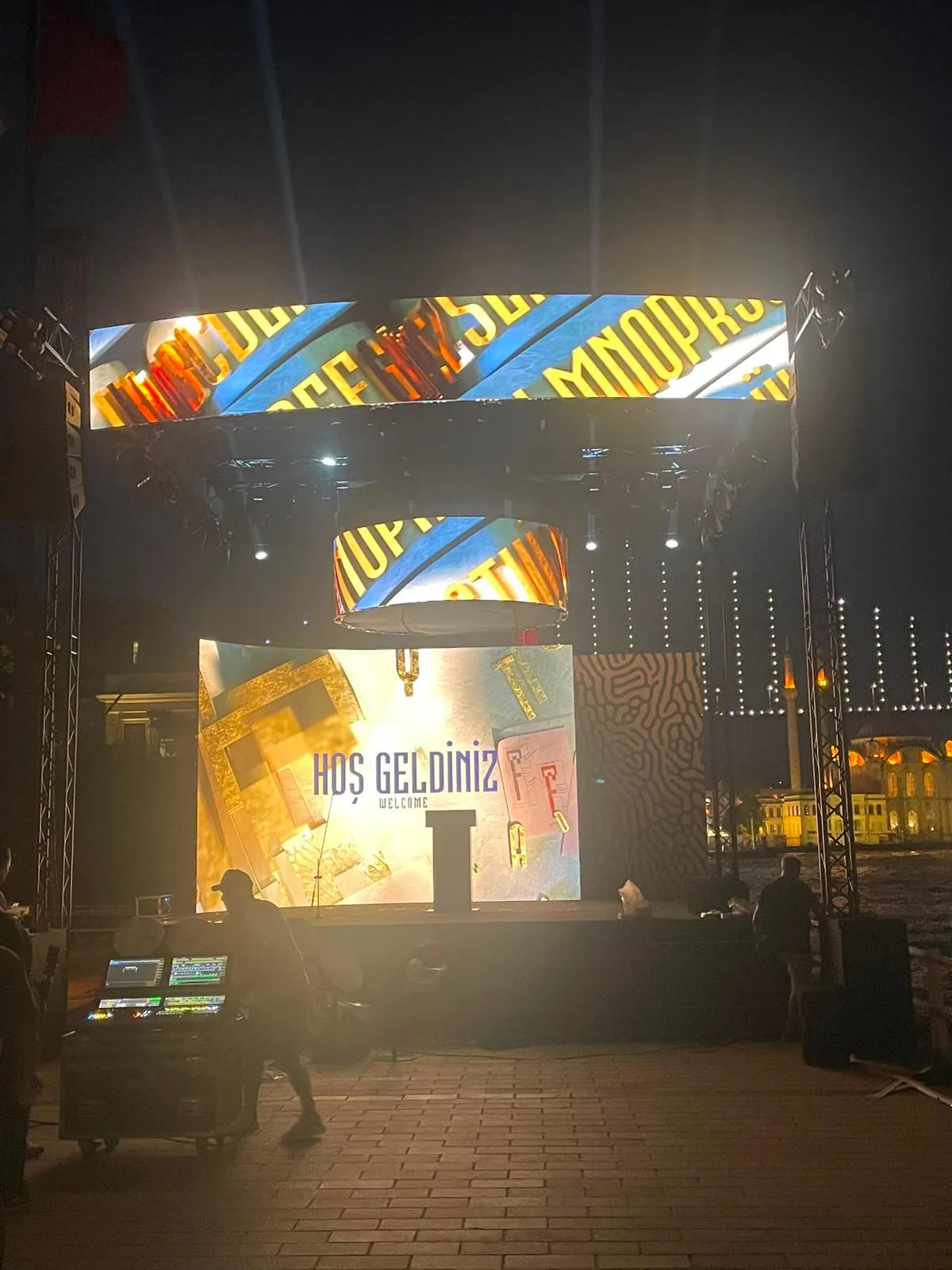
Sahneva's photographed application uses Absen P1.9 panels. Before load-in, the panels were preassembled in the depot to verify the intended form, rear access and connection path. This step is especially important for a curved P1.9 LED screen in Istanbul or a touring project elsewhere in Turkey because the physical geometry and the pixel canvas have to reach the venue as one coordinated plan.
Flexible modules vs. curved rental cabinets
| Decision point | Flexible or soft LED modules | Curved rental LED cabinets |
|---|---|---|
| How the shape is made | Bendable modules follow a custom support surface | Rigid cabinet units are joined at planned, repeatable angles |
| Best-fit geometry | Tight, irregular or sculptural forms that need module-level freedom | Planned concave, convex, polygonal or circular event forms |
| Pixel pitch | Depends on the exact flexible product quoted | Depends on the cabinet series; the Sahneva case shown here uses P1.9 |
| Event servicing | Access and replacement depend heavily on the custom support design | Rental cabinets and connections can be tested, transported and replaced as repeatable units |
| Setup workflow | Often requires a project-specific shaped base and module installation plan | Can be preassembled, numbered and rebuilt to an approved geometry on site |
| What the buyer must approve | Radius, module support, service access, surface continuity and pixel map | Panel count, join angles, support method, sightlines, alignment and pixel map |
The practical choice follows the design. A tightly wrapped architectural column may justify soft modules. A circular hanging band, curved stage header or reusable exhibition feature may be better served by angle-set rental cabinets. The comparison must use named products and drawings; broad labels alone do not establish image quality or cost.
Real P1.9 case: eight panels, 45 degrees, one circle
In the workshop setup below, eight Absen P1.9 panels were joined at 45-degree intervals. The geometry is direct: 8 × 45° = 360°. This created the smallest complete circular configuration demonstrated with this panel setup. It was used as a physical check before the curved elements were integrated into the event stage.
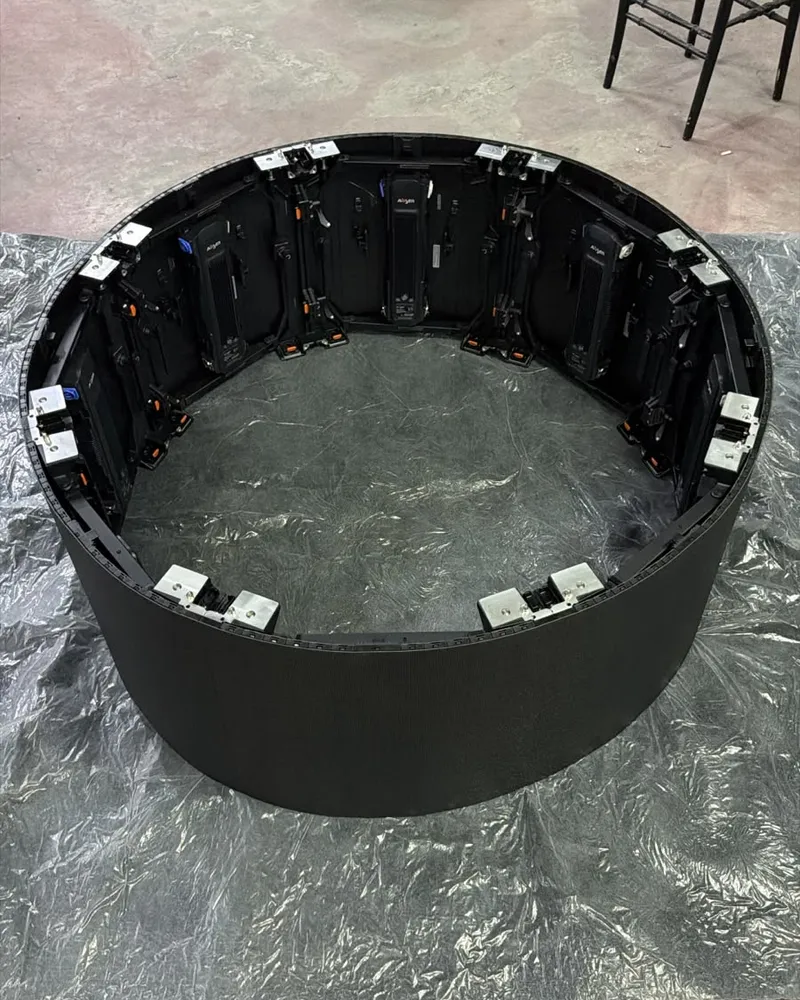
This is not a statement that every circular project must use eight panels. Larger diameters can be developed by changing the panel count and planned geometry, provided the support method, load, content resolution and sightlines are recalculated. The correct drawing should state the active diameter, screen height, panel count and final mapped pixel canvas.
Which system fits your event design?
Use the visual objective to create a shortlist, then let the technical drawing decide the system. These are common starting points, not automatic product selections:
Curved exhibition stand
Angle-set fine-pitch cabinets can suit close-view branded content when the target radius matches the available geometry.
Circular stage ring
Confirm the inner and outer diameter, support method, service access and whether the audience sees the front, back or both sides.
Sculptural or irregular surface
Soft modules may be more appropriate when the form cannot be described by repeatable cabinet angles.
Curved panoramic backdrop
Cabinet pitch, nearest viewer, camera angle and the content safe area must be approved together.
Viewing distance and content still control the result
Shape does not replace the normal LED selection process. The nearest viewer, smallest text, brightness, camera use and active screen dimensions still determine whether P1.9, P2.6, P2.9 or another system is appropriate. Use the separate LED pixel pitch and viewing-distance guide for that decision.
Curved content needs an exact pixel map
A standard 16:9 film rarely maps perfectly onto a circular ring or curved header. Request the active pixel canvas for every surface, then build the content around visible zones, join positions and audience angles. If the event is filmed, test camera shutter, moiré, brightness and content movement during rehearsal.
The LED geometry also has to sit inside the wider stage, truss, power and access plan. For a brief that includes the whole show rather than only the screen, review event stage production support in Turkey.
Brief to send for a curved or flexible LED quotation
A useful quotation names the proposed construction method and makes competing offers comparable. Send these details before asking for a final system and price:
Ask the supplier to state whether the offer uses soft modules or rental cabinets, the exact panel series and pitch, panel count, support structure, active dimensions, mapped resolution, processing, installation crew and exclusions. The LED screen rental price guide explains the other line items that should appear in a comparable quotation.
Frequently asked questions
Is a flexible LED screen the same as a curved LED screen?
Not necessarily. Flexible LED usually refers to bendable or soft modules mounted to a shaped surface. A curved rental LED screen can instead use cabinet-based panels joined at planned angles. Both can produce curved forms, but their structure, servicing and suitable applications differ.
Can P1.9 rental panels form a complete 360-degree circle?
Yes, when the selected cabinet geometry, support method and project dimensions allow it. In the Sahneva example shown here, eight Absen P1.9 panels were joined at 45 degrees each to form one complete 360-degree ring.
Is the eight-panel LED ring the only available diameter?
No. It is the smallest circular configuration demonstrated with this panel setup. Larger diameters can be planned by changing the panel count and geometry, subject to structural support, content mapping, sightlines and the actual event brief.
Are the joins on a curved rental LED wall completely invisible?
No responsible supplier should promise invisible joins under every condition. Accurate cabinet alignment, suitable content, brightness calibration and the intended viewing distance can create a visually continuous canvas, but the result should be checked from the audience and camera positions.
When is a curved P1.9 LED screen useful for an event?
It is a strong candidate for close-view product launches, exhibition stands, circular stage elements and premium corporate events where fine content detail and a controlled curved form matter. The pitch and geometry still need to match the nearest viewer, camera plan and content canvas.
What should I send for a curved LED screen quotation?
Send the venue, event date, indoor or outdoor use, required width and height, target radius or diameter, nearest viewing distance, camera positions, content type, installation window and any rigging or ground-support restrictions.
Related Services
Regional Rental
For fast planning and regional crew coordination based on your event location:
Go to the Regional Rental page →