In This Article
1. What drives the cost of technical production
A technical production budget is built from six inputs. Change any one of them and the total moves; change the venue and several move at once. Understanding which lever you are pulling is what turns a budget conversation from haggling into a scope decision.
| Input | What it covers | Why it moves the total |
|---|---|---|
| Physical scale | Stage area in m², screen size, rig weight, tent span | Drives material quantity, but also truck count and crew hours — scale rarely rises alone |
| Equipment class | Pixel pitch, PA type, fixture quality, deck load rating | A finer pixel pitch or a line array costs more per m² and often needs more processing behind it |
| Crew and shifts | Riggers, audio, lighting, video, stage hands, operators | Usually the largest single line on a mid-size build; shift count matters more than headcount |
| Build and de-rig time | Hours on site before doors and after the last guest | A two-day build is not twice a one-day build — it adds accommodation, standby and venue hire |
| Transport | Vehicle count, distance, loading equipment | Distance from the warehouse; beyond a certain range, crew travel and accommodation follow |
| Venue constraints | Lift size, dock hours, ceiling height, power, rigging points | Can add an entire shift without changing a single item on the equipment list |
The counter-intuitive one is the last. Two identical specifications in two different rooms can differ substantially in price purely because one venue has a goods lift that takes a full-size deck and the other does not. This is why a site survey usually precedes an accurate quotation rather than following it — the room decides what is possible before the budget decides what is affordable.
2. Line items that can be priced separately
An itemised quotation is not a longer bill; it is a readable one. Each of the following is a genuinely distinct cost, and seeing them listed lets you check that nothing has been assumed away. If a line is missing, it has usually been omitted from the scope rather than provided free.
| Line item | What it should cover | What to ask if it is missing |
|---|---|---|
| Equipment by discipline | Stage, LED, audio, lighting, truss listed separately with specification | Which specification was assumed — pitch, PA type, deck rating? |
| Crew by role and shift | How many people, in which roles, across how many shifts | Who installs it, and who operates it during the event? |
| Transport | Vehicles, distance, loading equipment such as forklift or crane | Is delivery included, and from where? |
| Setup and dismantling | Build and de-rig as scheduled hours, not a vague allowance | When does the crew arrive, and when is the venue handed back? |
| Surfaces and finishing | Carpet, skirting, edge protection, ramps and stairs | Is the platform delivered finished or bare? |
| Power and distribution | Distribution, cabling, ramping, generator if required | Is house power assumed sufficient, and who verified that? |
| Rigging and load engineering | Point loads, calculations, ground support where roof rigging is unavailable | Who signs off the load calculation for the venue? |
| Operators for the live window | Audio, lighting and presentation operators during the show | Is anyone at the desk once the doors open? |
| Standby and redundancy | Spare channels, backup playback, on-call crew | What happens if a critical path fails mid-session? |
For a worked example of how area, covering and transport combine on a single discipline, our stage platform rental prices page publishes the m² rates and shows the arithmetic on a sample build.
3. Season, city, venue and logistics
Production is time-bound in a way that most rented goods are not: the same LED wall cannot be at two events on the same evening. That single constraint explains most of the variation you will see between dates, and most of the flexibility you will find outside them.
| Factor | Typical effect on a quote |
|---|---|
| Peak dates | Summer weekends, the graduation and awards seasons and year-end carry the least availability. Crew and stock are committed earliest here, so late enquiries have fewer options rather than simply higher prices. |
| Weekday and off-season | Midweek and winter dates are where genuine flexibility exists — on crew scheduling, on build windows and on how long equipment can stay on site. |
| Distance from the warehouse | Transport scales with distance, and past a certain range crew travel and overnight accommodation join the calculation. |
| Venue access | Goods lift dimensions, dock booking hours and corridor turns cap what can physically reach the room, and can force an overnight build. |
| Indoor versus outdoor | Outdoor adds weather-rated equipment, ballast or anchoring, generator power and a contingency plan — all of which are real line items. |
| Shared build windows | In congress and exhibition venues you share the floor and the freight lift with other contractors, which lengthens the build without adding equipment. |
4. Comparing quotes on the same scope
Two quotes for the same event routinely differ by a wide margin, and the reason is almost never that one supplier is simply expensive. It is that they are quoting different work. Before comparing totals, normalise the scope — then compare like with like.
| Check | What to line up across both quotes |
|---|---|
| Area and dimensions | Stage m², screen dimensions in metres, deck height — not just descriptive words |
| Specification | Pixel pitch, PA type, fixture count, deck load rating |
| Days | Rental days versus event days; is the build day charged? |
| Crew | Number of people, roles, and how many shifts each |
| Included or excluded | Transport, setup, de-rig, power, rigging, operators |
| Site assumptions | Who supplies power, whether a survey has happened, which access route was assumed |
| Contingency | Standby crew, spare channels, backup playback path |
| Tax and terms | Whether the figure includes VAT, and the payment schedule |
Once these are aligned, a remaining gap is meaningful and worth asking about directly. In our experience the honest answers are usually one of three: a different equipment class, a different crew assumption, or one supplier having already surveyed the venue while the other has not.
5. Signs of a missing or risky quote
A cheap quote and an incomplete quote look identical until build day. These are the omissions that most often turn into a variation order later, when you have no leverage and no time.
- One lump sum, no breakdown. You cannot remove what you do not need, and you cannot see what was never included.
- No crew count or shift plan. Labour is usually the largest variable. If it is not stated, it has not been scoped.
- No build and de-rig times. Access hours are a venue constraint. A quote that ignores them has not read the venue's rules.
- Transport 'to be confirmed'. Distance is knowable at quotation stage. Leaving it open moves a known cost into your risk column.
- LED quoted with no pixel pitch. Pitch drives both price and whether the front row can read the screen.
- Rigging with no load calculation. This is a safety document, not paperwork. Its absence is the most serious item on this list.
- No standby or redundancy mentioned. Ask what happens if the critical path fails during the live window.
- VAT and payment terms unstated. A figure that turns out to be pre-tax reorders your comparison entirely.
6. The brief to send for an accurate price
Most quotation rounds go through two or three revisions because the first brief was incomplete. Sending the following up front usually means the first quotation is close to the final one, and every line in it is traceable to something you asked for.
| Item | Why it changes the quote |
|---|---|
| Venue and hall name | Ceiling height, rigging points and the load-in route are known properties of a named room. This single field rules most technical options in or out. |
| Dates and access windows | Event date plus when the room is genuinely available for build and de-rig. Shared build windows need flagging early. |
| Audience and layout | Headcount and seating style — theatre, cabaret, standing. Coverage and sightlines follow the layout, not the guest count alone. |
| Event format | Conference, launch, gala, awards, concert or exhibition. Format sets stage geometry, microphone count and crew size. |
| What appears on screen | Presentations, video playback, live camera. This decides the screen, the processing chain and whether an operator is needed. |
| Streaming or recording | Whether the session goes out live or is captured, and to which platform. Camera and encode are separate scope. |
If part of the brief is genuinely undecided, say so rather than guessing. A good supplier will quote the uncertain element as a clearly marked option instead of burying an assumption inside the total.
Frequently asked questions
What makes up the cost of event technical production?
Six things move it more than anything else: the physical scale of the build (stage area, screen size, rig weight), the class of equipment, the number of crew and how many shifts they work, build and de-rig time, transport distance, and the constraints of the venue itself. Equipment is rarely the largest line; crew, time and access usually are.
Which items should appear separately on an AV production quote?
Equipment by discipline, crew by role and shift, transport, setup and dismantling, consumables such as carpet and skirting, power distribution, rigging and load engineering, operators for the live window, and any standby or redundancy. Seeing them itemised is not a sign of padding — it is how you check that nothing has been quietly left out.
Why do two suppliers quote very different prices for the same event?
Almost always because they are quoting different scopes. One may include setup and dismantling in the equipment line while the other lists it separately; one may assume the venue supplies power; one may have priced a lower pixel pitch or fewer crew. Normalise the scope first — same area, same specification, same days, same crew — and the gap usually narrows sharply.
Does the season or the city change the price?
Yes. Production is time-bound: the same equipment cannot serve two events on the same day, so peak dates carry less flexibility. Distance from the supplier's warehouse adds transport and, beyond a certain range, crew accommodation. Venue access — lift dimensions, dock hours, night-only load-in — can add a shift regardless of the equipment list.
What are the warning signs of a risky quote?
A single lump sum with no breakdown, no stated crew count, no build and de-rig times, transport marked to be confirmed, LED quoted without a pixel pitch, rigging without a load calculation, and no mention of who covers standby if something fails. Each of these is a cost that has not disappeared — it has just not been written down yet.
What information do you need to price an event accurately?
Venue and hall name, event date plus build-up and de-rig access windows, expected audience and seating layout, event format, what has to appear on screen, and whether the session is streamed or recorded. With those six, a quotation can be itemised rather than estimated.
Get an itemised quote for your event
Sahneva has delivered 700+ projects covering stage, sound and lighting, LED screen, and tent, managing the process from technical survey to de-rig under one contract. Send the six items above and you will get a quotation broken down by line, with anything uncertain marked as an option rather than folded into the total.
Explore more articles
All posts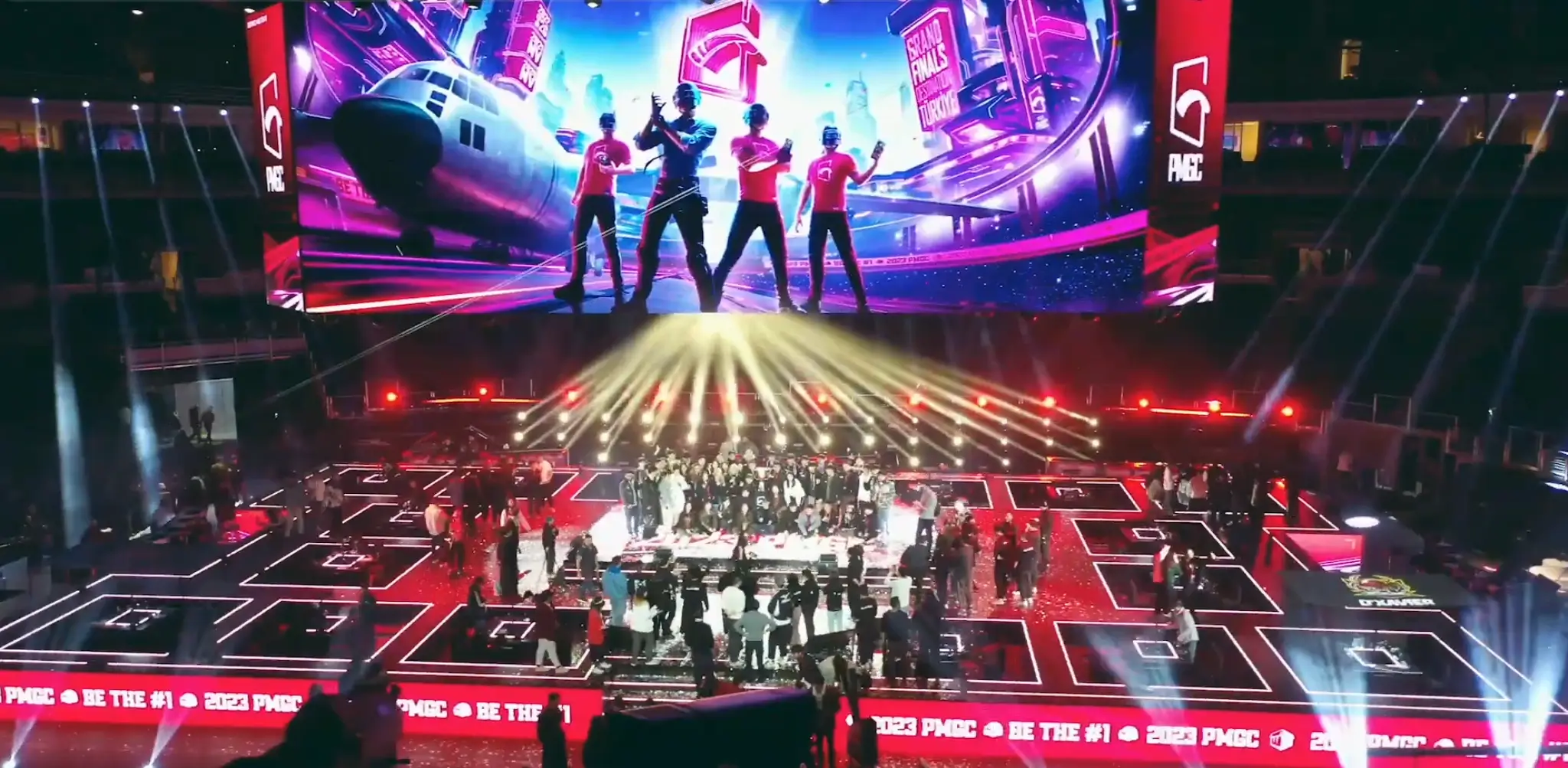
General
Corporate Event Technical Production Guide
Venue checks, stage design, LED screens, sound, lighting, rigging, power, rehearsal and backup planning for professional corporate events.

General
Fişekhane PUBG Mobile Guinness World Record™
At the Fişekhane PUBG Mobile event, we provided the stage, stage platform, LED screen, sound and lighting, and live broadcast infrastructure.

General
Product Launch Event Organization
Stage, LED screen, sound and lighting, and technical production for product launches. Turnkey setup and operation across Turkey.
Related Services
Regional Rental
For fast planning and regional crew coordination based on your event location:
Go to the Regional Rental page →