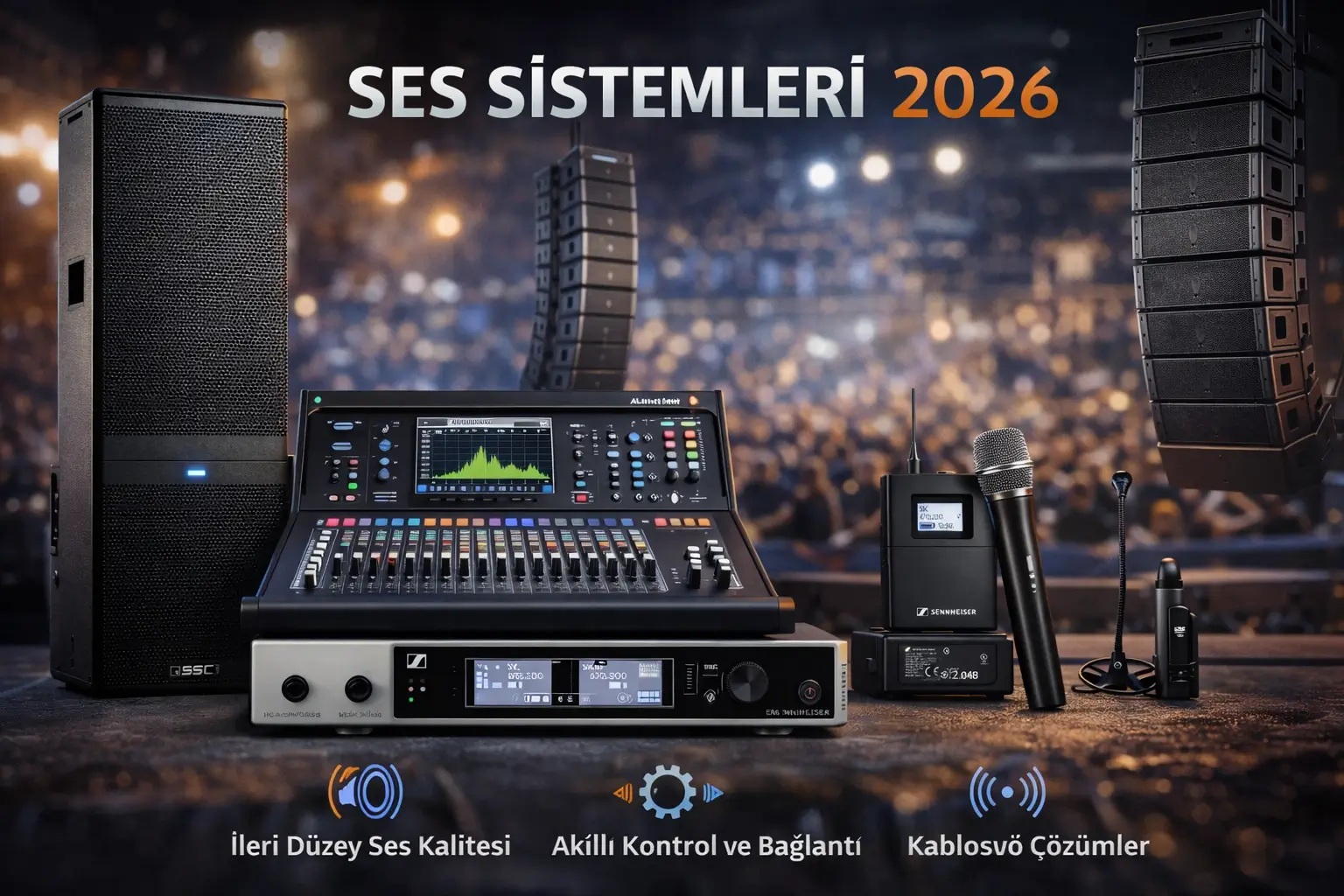
As of 2026, professional sound systems have moved beyond high-decibel-focused approaches and entered an era grounded in spectral efficiency, intelligent frequency management and acoustic simulation. In current projects, the conversation is no longer about "louder sound," but rather about more controlled, cleaner and safer sound.
Wireless Microphone Technologies 2026: Smart Solutions in Spectrum Wars
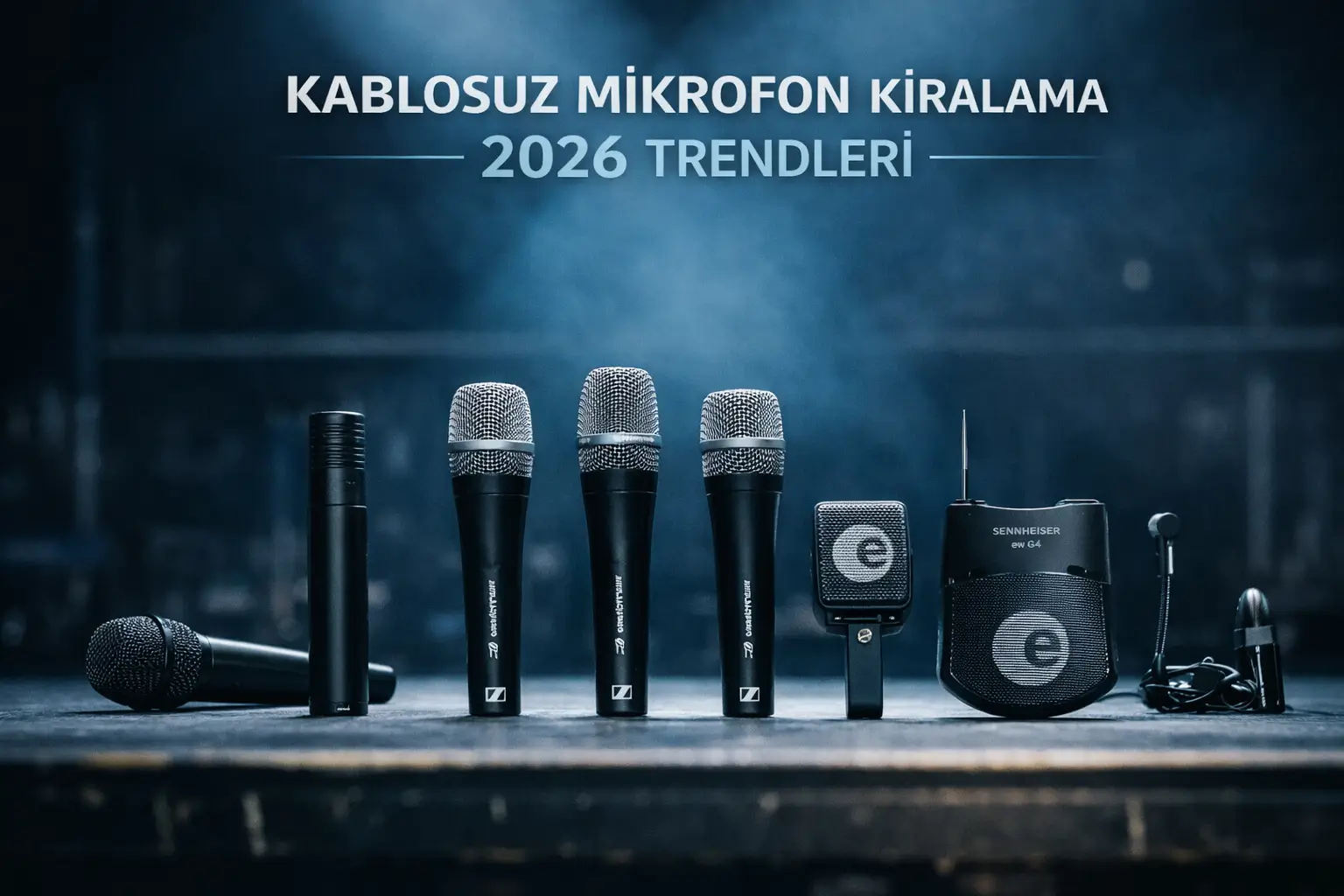
The narrowing of the RF (Radio Frequency) spectrum due to 5G infrastructure and dense digital broadcast traffic has clearly exposed the limitations of traditional analog systems. As of 2026, the fundamental approach in wireless microphone systems is built not on "opening channels" but on managing the spectrum.
The Era of WMAS (Wireless Multichannel Audio Systems)
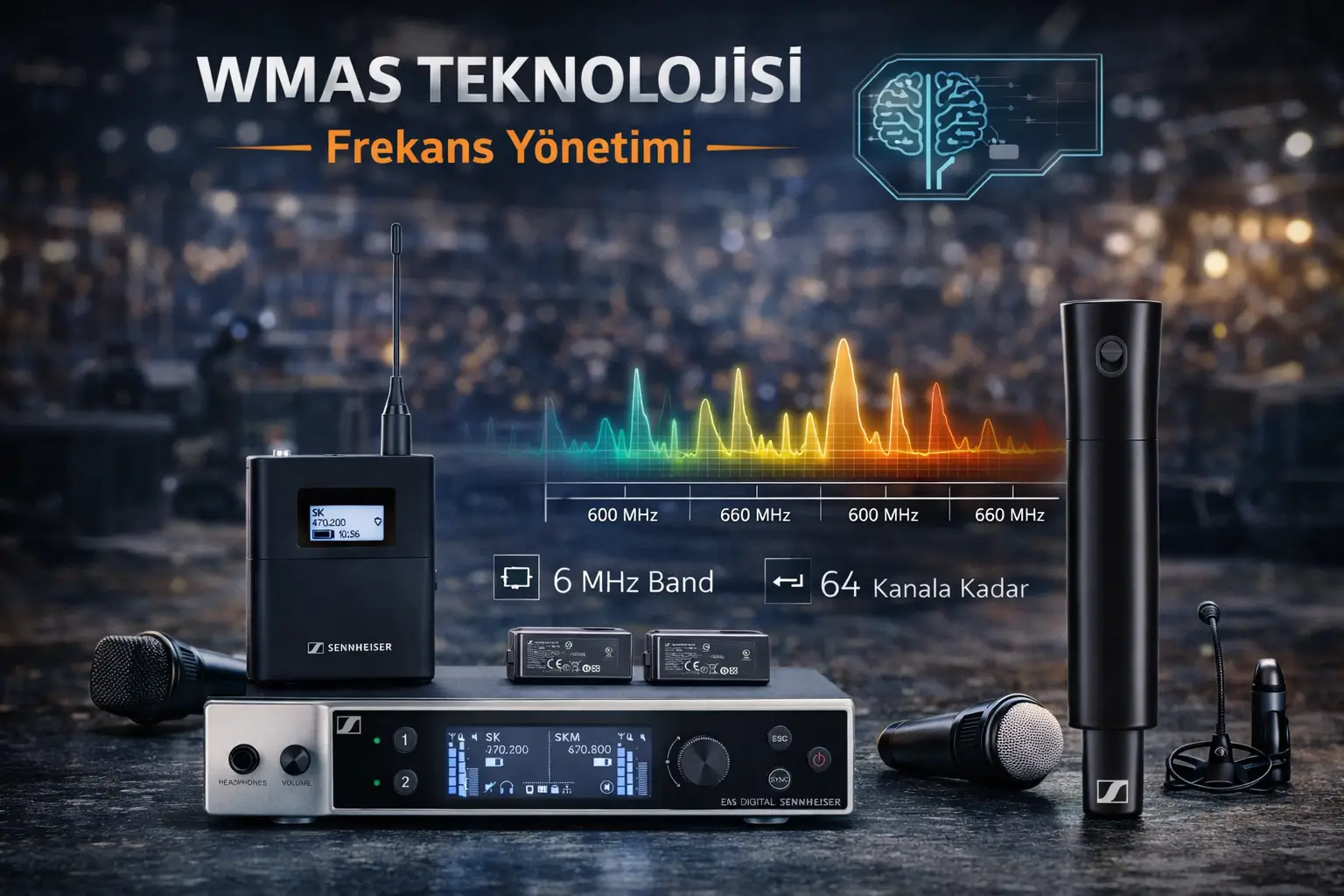
WMAS systems have different channel architectures. Sennheiser Spectera supports up to 64 audio channels per base station, split into 32 inputs and 32 outputs. Its bidirectional SEK bodypack can handle microphone/line and in-ear monitor signals at the same time; wideband RF carriers use 6 or 8 MHz depending on the region. See the Sennheiser Spectera specifications.
Shure Axient Digital PSM is an in-ear monitoring system. Its Multichannel Wideband mode supports up to four stereo audio channels per radio, with channel expansion and WMAS availability depending on the configuration and regional regulations. These figures describe a different system design and should not be treated as interchangeable with Spectera. See the Shure Axient Digital PSM specifications.
RF Scanning and Frequency Coordination
Spectrum scanning identifies occupied frequencies and helps the team coordinate working and backup channels. On compatible Shure Axient Digital configurations, interference management can switch to a backup frequency manually or automatically. The required receivers, transmitters and control hardware must be confirmed for the chosen setup. See Shure's Axient Digital system features.
AES-256 Encryption and Data Security
Compatible digital wireless systems offer AES-256 encryption to protect the radio link. The team must confirm model support, enable encryption and control access to the receiving equipment and downstream audio feeds. Wireless encryption is one part of the event's audio-security plan.
Engineering Note: "Invisible Cable" Security
RF coordination continues during the programme. The team monitors signal levels, antenna coverage and interference, keeps backup channels available and agrees a recovery procedure with the show operator.
Line Array Sound Systems 2026: Acoustic Simulation and Pinpoint Coverage
Achieving homogeneous sound distribution in large-scale events goes far beyond simply hanging speakers. System-specific prediction software, array geometry and measurements on site help the engineer plan coverage and tune the system.
Active Integrated Architecture and Network Control
Amplification and networking depend on the selected system. For example, Meyer Sound PANTHER is self-powered and accepts Milan AVB audio, while L-Acoustics LA7.16iis an external amplified controller. Confirm the loudspeaker, amplifier, network protocol and monitoring software as one compatible design.
Cardioid Subwoofer Engineering
Cardioid and end-fire arrays can reduce low-frequency sound behind the stage. The result depends on cabinet placement, spacing, delay, polarity, frequency and the surrounding surfaces. Check the manufacturer's configuration guidance and measure the result across the audience and stage areas.
Intelligent Room Calibration (System Tuning)
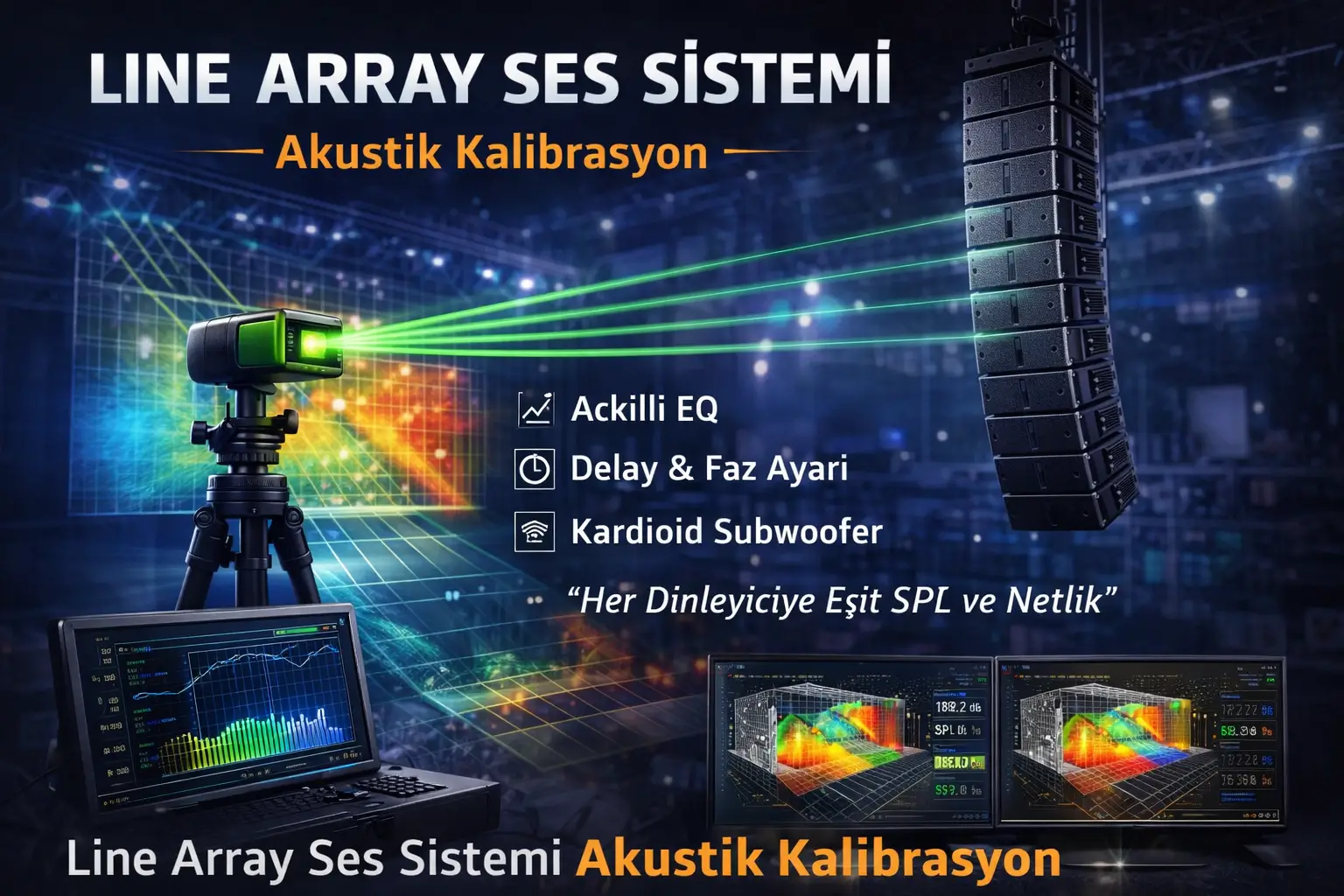
Venue measurements and acoustic analysis help the system engineer adjust EQ, delay, level and phase. Measurements should cover front, rear and side audience positions as well as transitions between the main system and fills. The aim is consistent coverage within the limits of the room and the chosen equipment.
Why Invest in 2026 Technologies?
- High reliability: frequency conflicts and dropouts are minimized.
- Fast and modular setup: more stable systems in less time.
- Sustainability: low-energy Class-D amplifiers.
- Hybrid compatibility: seamless simultaneous management of live broadcasts and physical events.
The year 2026 marks a turning point where technology merges with engineering reflex in sound systems. Properly planned systems mean not just better sound — but safer, more controlled and more professional events. 2026 technologies are transforming event production from an equipment installation into a fully data-driven engineering process. Sahneva Technical, by placing these new-generation digital standards at the center of its operational approach, focuses on building high-prestige event infrastructures where technical risks are minimized.
For professional sound system rental solutions, you can contact our team and visit our technical partner page to get a closer look at our engineering approach.
👉 Professional sound and lighting solutions
Let us plan the right sound, lighting and engineering support for your projects.
Related Services
Regional Rental
For fast planning and regional crew coordination based on your event location:
Go to the Regional Rental page →